
CMMI Certification – Complete Guide to CMMI Certification Process and Maturity Levels
CMMI Certification helps organizations improve process maturity, operational efficiency, product quality, and business performance through a globally recognized process improvement framework. The CMMI certification process includes gap analysis, process implementation, employee training, internal assessments, and formal appraisal to achieve the desired CMMI maturity level. By obtaining CMMI certification, organizations can enhance project delivery, reduce risks, improve customer satisfaction, and demonstrate their commitment to continuous improvement, quality management, and operational excellence. For more information, contact us at info@topcertifier.com.
Get Free Consultation Call Us Now
Organizations looking to improve process maturity, operational efficiency, and business performance often adopt the Capability Maturity Model Integration (CMMI) framework. This globally recognized framework helps standardize processes, reduce risks, enhance quality, and deliver consistent results. CMMI Certification validates an organization's commitment to continuous improvement and operational excellence, helping build customer confidence and strengthen market competitiveness.
For organizations planning their implementation journey, the CMMI Level 3 Certification Process provides a structured approach to achieving higher process maturity.
CMMI Certification demonstrates an organization's commitment to process excellence, continuous improvement, and the delivery of high-quality products and services through standardized and well-managed processes.
Achieving a higher CMMI maturity level helps organizations enhance operational performance, improve customer satisfaction, reduce project risks, and drive sustainable business growth.
What is CMMI Certification?
CMMI (Capability Maturity Model Integration) is a proven process improvement framework designed to help organizations optimize workflows, improve project management practices, and achieve predictable business outcomes. CMMI certification is awarded following a formal appraisal that evaluates an organization's processes against internationally recognized CMMI best practices. The framework provides a structured approach for managing projects, improving quality, enhancing performance, and driving continuous organizational improvement.
Organizations that achieve CMMI certification often experience improved efficiency, better resource utilization, reduced operational costs, enhanced customer satisfaction, and stronger market credibility. CMMI certification also serves as a benchmark for demonstrating process capability and organizational maturity to customers, partners, and stakeholders.
Organizations can also review the CMMI Certification Process to understand the key stages involved in implementing and achieving CMMI certification.
Why is CMMI Certification Important?
In today's competitive business environment, customers and stakeholders expect organizations to deliver reliable, high-quality products and services. CMMI certification provides a structured framework for achieving these expectations by improving process performance, strengthening governance, and supporting continuous improvement initiatives. It helps organizations build trust, improve customer retention, and enhance overall business performance.
Achieve CMMI Certification : A Strategic 10-Step Approach
Organizations preparing for certification can follow the CMMI Certification Steps to understand the activities involved from initial planning through appraisal and continual improvement.
1. Initial Consultation and Process Assessment
We begin by understanding your organization’s current workflows, project management practices, and business objectives to create a clear roadmap for CMMI implementation.
2. Defining Scope and Process Improvement Goals
A customized strategy is developed based on your industry, operational challenges, and process maturity targets.
3. Comprehensive Gap Analysis
Existing processes are evaluated against CMMI model requirements to identify gaps, risks, and opportunities for improvement.
4. Planning and Process Framework Development
A structured action plan is created to develop or refine process frameworks aligned with CMMI best practices and organizational goals.
5. Training and Team Awareness
Employees receive training on process improvement, performance measurement, and quality management to ensure successful adoption.
6. Process Implementation
Improved workflows and best practices are implemented across the organization with continuous expert support.
7. Internal Process Review
Internal reviews are conducted to evaluate process effectiveness and ensure readiness for the appraisal.
8. Management Review and Commitment
Leadership evaluates performance and confirms alignment with business goals and process maturity objectives.
9. Appraisal and Corrective Actions
A formal CMMI appraisal is conducted, and any improvement areas are addressed through corrective actions. Organizations can learn more about the CMMI Appraisal Process to understand how the appraisal is conducted.
10. Achieving CMMI Certification
After meeting the required maturity level, the organization achieves CMMI certification and continues improving processes and performance.
With this structured 10-step process, organizations searching for CMMI Certification can achieve certification confidently, efficiently, and on time. Organizations can also learn How to Get CMMI Certification and prepare effectively for the certification journey.

Which Industries Require CMMI Certification
CMMI Certification is highly beneficial for organizations aiming to achieve higher process maturity, improve operational efficiency, and ensure consistent performance across industries. It helps businesses strengthen project management, enhance service quality, reduce risks, and align their processes with globally recognized best practices.
Major Benefits of CMMI Certification Across Industries includes :
- Information Technology and Software Development
- Engineering and Product Development
- Financial Services and FinTech
- Healthcare and Medical Technology
- Telecommunications and Digital Services
- Consulting and Outsourcing Services
CMMI Implementation Success Stories
- Software Development Organization Achieved Better Project Delivery: A software development company implementing CMMI Level 3 practices standardized its project management and software development lifecycle processes. As a result, the organization improved schedule adherence, reduced project delays, and enhanced customer satisfaction through consistent delivery of high-quality software solutions.
- IT Services Company Reduced Quality Issues: By adopting CMMI process improvement methodologies, an IT services provider established stronger quality assurance controls and risk management practices. The organization experienced fewer defects, improved service quality, and increased operational efficiency across multiple projects.
- Engineering Enterprise Improved Process Consistency: A large engineering organization leveraged the CMMI framework to create standardized workflows across departments. The implementation helped reduce process variations, improve collaboration between teams, and enhance overall business performance.
- Technology Company Strengthened Risk Management: Through CMMI implementation, a technology company developed a structured approach to identifying and mitigating project risks. This resulted in improved project predictability, better resource utilization, and greater confidence among customers and stakeholders.
- Global Enterprise Enhanced Process Maturity: A multinational organization pursuing higher CMMI maturity levels integrated continuous improvement practices into its operations. The initiative improved governance, increased productivity, and supported sustainable business growth across multiple locations.
These CMMI implementation success stories demonstrate how organizations across software development, IT services, engineering, manufacturing, and technology sectors use the CMMI framework to improve process maturity, enhance quality management, reduce operational risks, and achieve long-term business objectives. Effective CMMI implementation enables organizations to establish repeatable processes, improve project performance, and deliver consistent value to customers.
Why Choose TopCertifier for CMMI Certification?
TopCertifier, a division of Veave Technologies Pvt. Ltd., helps organizations achieve their desired CMMI maturity level through expert consulting and implementation support.
✓ Process Documentation
✓ Training Programs
✓ Appraisal Preparation
✓ Continual Improvement
Through Veave Technologies' association as a CMMI Institute Strategic Partner, organizations gain access to proven methodologies and globally recognized process improvement practices.
Related CMMI Resources
CMMI Templates Free Download
ISO Certifications
- ISO 9001 Certification - Quality Management System (QMS)
- ISO 14001 Certification - Environmental Management System (EMS)
- ISO 45001 Certification - Occupational Health and Safety Management System (OHSMS)
- ISO 22000 Certification - Food Safety Management System (FSMS)
- ISO 27001 Certification - Information Security Management System (ISMS)
- CMMI Certification - Capability Maturity Model Integration
- EU GDPR Certification - European Union General Data Protection Regulation
- HIPAA Certification - Health Insurance Portability and Accountability Act
- PCI DSS Certification - Payment Card Industry Data Security Standard
- SOC 2 Certification - Service Organization Control 2
Frequently Asked Questions
CMMI (Capability Maturity Model Integration) is a globally recognized framework that helps organizations improve process efficiency, quality, and performance through continuous improvement practices.
CMMI Certification is suitable for IT companies, software development firms, project managers, quality professionals, process improvement teams, and organizations seeking operational excellence.
CMMI Certification helps improve process maturity, enhance product quality, increase customer satisfaction, reduce risks, and strengthen business competitiveness.
The certification timeline depends on the organization's size, current process maturity, and readiness. Most organizations complete the implementation and appraisal process within a few months.
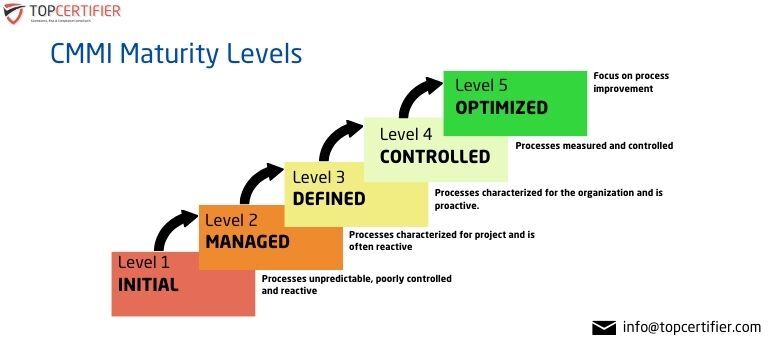
CMMI consists of five maturity levels: Initial, Managed, Defined, Quantitatively Managed, and Optimizing. Each level represents increasing process maturity and capability.
No, CMMI Certification is not mandatory. However, many organizations pursue it to improve business processes, meet customer requirements, and gain a competitive advantage.
The cost varies depending on organizational size, scope, consulting requirements, training needs, and appraisal activities. Organizations should request a customized quotation based on their specific requirements.
The process typically includes gap analysis, process implementation, staff training, internal audits, process improvements, and a formal appraisal conducted by an authorized CMMI appraisal team.
Client Review





GLOBAL SUPPORT
India| USA| Canada| London| UK| Australia| New Zealand| South Africa| Singapore| Dubai,Uae| Saudi Arabia| SriLanka| Bangladesh| Myanmar| Germany| Malaysia| Fiji| Maldives| Bahrain| Kuwait| Oman| Qatar| Nigeria| Kenya| Lebanon| Iraq| Jordan| Thailand| Philippines| Spain| Turkey| Israel| Iran| Algeria| Angola| Ethiopia| Congo| Belgium| Austria| Portugal| Italy
Our Recent Blogs