
ISO 45001 Certification Cost – Understanding Pricing Factors and Budget Planning
ISO 45001 Certification Cost varies significantly depending on organization size, number of worksites, hazard complexity, existing safety maturity, and the scope of consulting support required. Understanding these cost drivers helps organizations budget accurately and avoid unexpected expenses during the certification journey. This guide breaks down the main components of ISO 45001 certification cost and the factors that influence overall pricing.
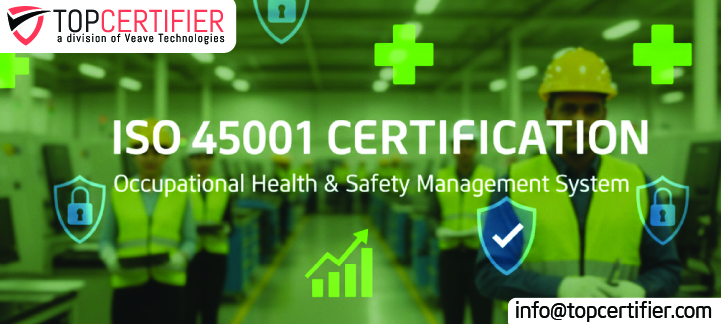
Organizations evaluating ISO 45001 Certification often want a clear picture of what the process will cost before committing to a certification project. Costs generally fall into a few categories: consulting and implementation support, employee training, internal audits, and the certification body's audit and certificate issuance fees. Understanding how each of these components is priced helps organizations plan realistic budgets and compare quotes from different providers on a like-for-like basis.
ISO 45001 Certification Cost depends on multiple factors including company size, worksite count, hazard complexity, and the level of consulting support required to close existing gaps.
Organizations that understand the true cost drivers of ISO 45001 certification are better positioned to budget accurately and avoid unexpected expenses mid-project.
What Determines ISO 45001 Certification Cost?
ISO 45001 Certification Cost Certification Cost is influenced by the size of the organization, the number of employees and worksites, the complexity and severity of occupational hazards present, the current maturity of existing safety practices, and whether external consulting support is required to close gaps. Organizations with well-established safety management systems generally incur lower implementation costs than those starting from scratch.
In addition to consulting and implementation costs, organizations should budget for the certification body's audit fees, which are typically based on the number of audit days required, itself a function of site size, employee headcount, and hazard risk level. Ongoing costs also include annual surveillance audits and periodic recertification audits, typically every three years.
Why Understanding Cost Factors Matters
Organizations that understand the drivers of ISO 45001 certification cost can make more informed decisions when comparing quotes, negotiating with consulting partners, and planning multi-year compliance budgets. Without this understanding, organizations risk underestimating the total investment required, particularly around ongoing surveillance audits, refresher training, and system maintenance costs that continue well beyond the initial certification.
Planning Your ISO 45001 Certification Budget : A 10-Step Approach
1. Assess Current Safety Maturity
Determine how much gap-closing work is needed before certification readiness, as this directly affects consulting cost.
2. Define Scope and Site Count
Identify how many worksites, departments, and employees will be included in the certification scope.
3. Estimate Consulting and Implementation Cost
Obtain quotes for gap analysis, documentation, and implementation support based on your defined scope.
4. Budget for Employee Training
Factor in the cost of safety awareness and role-specific training across your workforce and contractors.
5. Estimate Internal Audit Cost
Include the cost of internal audits conducted before the certification audit.
6. Request Certification Body Quotes
Obtain audit-day and fee estimates from accredited certification bodies based on your site size and hazard profile.
7. Account for Corrective Action Costs
Budget for any additional work needed to resolve non-conformities identified during audits.
8. Include Certificate Issuance Fees
Factor in the certification body's fee for issuing the ISO 45001 certificate upon successful audit completion.
9. Plan for Annual Surveillance Audits
Budget for yearly surveillance audits required to maintain certification between three-year recertification cycles.
10. Plan for Recertification
Anticipate the cost of the full recertification audit, typically required every three years.
A structured cost-planning approach helps organizations budget accurately for ISO 45001 Certification across the full multi-year compliance cycle, not just the initial audit.
ISO 45001 Certification Cost Planning Success Story
- Mid-Size Manufacturer Avoided Budget Overruns: A mid-size manufacturer worked with TopCertifier to build a detailed, multi-year certification budget, avoiding the unexpected costs that often arise from underestimating surveillance audit and training expenses.
- Construction Firm Right-Sized Its Certification Investment: A growing construction firm used a phased certification approach recommended by TopCertifier, spreading implementation costs over a realistic timeline that matched its project cash flow.
- Multi-Site Logistics Company Negotiated Better Audit-Day Pricing: A multi-site logistics company consolidated its certification scope planning with TopCertifier's guidance, resulting in more efficient audit-day allocation and reduced total certification body fees.
These examples show how understanding ISO 45001 certification cost factors in advance helps organizations of all sizes plan realistic, sustainable compliance budgets rather than facing unexpected expenses mid-project.
Why Choose TopCertifier for Cost-Effective ISO 45001 Certification?
TopCertifier provides transparent, itemized cost estimates for ISO 45001 certification projects, helping organizations understand exactly what they are paying for at each stage of implementation.
Our team helps clients right-size their certification scope and implementation approach, avoiding unnecessary costs while ensuring the resulting OH&S management system is robust and audit-ready.
Related ISO 45001 Resources
ISO 45001 Templates Free Download
Our Security Services
- TPRM Service
- SIEM Service
- SOC and NOC Service
- SOC as a Service
- NOC as a Service
- SSAE 18 and SSAE 16 Report
- ISAE 3402 and ISAE 3000 Report
- SSAE 3402 and SSAE 3000 Report
- SOX Attestation
- US GAAP Audit and Reporting
- CPA Firm
- Smeta Audit Service
ISO Certifications
- ISO 9001 Certification - Quality Management System
- ISO 14001 Certification - Environmental Management
- ISO 45001 Certification
- ISO 45001 Certification - Food Safety Management System
- ISO 45001 Certification - Information Security Management
- CMMI Certification - Capability Maturity Model Integration
- EU GDPR Certification - General Data Protection Regulation
- HIPAA Certification – Health Insurance Portability and Accountability Act
- PCI DSS Certification - Payment Card Industry
- SOC 2 Certification - System Organisation Standard
Frequently Asked Questions
Key factors include company size, number of worksites, hazard complexity, current safety maturity, and the level of consulting support required.
Total cost typically includes both consulting/implementation fees and separate fees charged by the accredited certification body for the audit and certificate issuance.
Yes, organizations must budget for annual surveillance audits and a full recertification audit approximately every three years.
Yes, larger organizations with more employees and worksites typically require more audit days, increasing both consulting and certification body costs.
Costs can often be reduced by starting with a strong existing safety foundation, right-sizing the certification scope, and using efficient audit-day planning.
Employee training is usually a separate line item, though some consulting packages bundle training into the overall implementation cost.
Certification body audit costs vary by region, hazard level, and organization size, and are typically quoted based on estimated audit days required.
Multi-site organizations generally incur higher costs due to additional audit days, though a centralized management system can improve efficiency.
Consulting fees typically cover gap analysis, hazard identification and risk assessment, documentation development, training delivery, and internal audit support.
The most accurate estimates come from an initial consultation and gap analysis that accounts for your organization's specific size, hazard profile, and current safety maturity.
Client Review





GLOBAL SUPPORT
India| USA| Canada| London| UK| Australia| New Zealand| South Africa| Singapore| Dubai,Uae| Saudi Arabia| SriLanka| Bangladesh| Myanmar| Germany| Malaysia| Fiji| Maldives| Bahrain| Kuwait| Oman| Qatar| Nigeria| Kenya| Lebanon| Iraq| Jordan| Thailand| Philippines| Spain| Turkey| Israel| Iran| Algeria| Angola| Ethiopia| Congo| Belgium| Austria| Portugal| Italy
Our Recent Blogs