
How to Get PCI DSS Certification – Step-by-Step Guide to PCI DSS Compliance
Learn how to get PCI DSS Certification with our step-by-step guide designed for organizations that store, process, or transmit payment card data. The PCI DSS certification process includes determining your compliance scope, conducting a gap analysis, implementing required security controls, performing vulnerability assessments and penetration testing, completing compliance validation, and preparing for the final audit. Following a structured PCI DSS compliance process helps organizations protect cardholder data, strengthen payment security, meet PCI DSS v4.0 requirements, and successfully achieve and maintain PCI DSS certification. For more information, contact us at info@topcertifier.com.
Get Free Consultation Call Us Now
Organizations that store, process, or transmit payment card data must comply with the Payment Card Industry Data Security Standard (PCI DSS) and establish effective PCI DSS Compliance practices to protect sensitive cardholder information and maintain secure payment environments. If you are wondering how to get PCI DSS Certification, the process involves determining your compliance scope, implementing required security controls, conducting security assessments, and successfully validating compliance through the appropriate assessment process. Following a structured approach helps organizations strengthen payment security, reduce cybersecurity risks, and meet PCI DSS v4.0 requirements.
Getting PCI DSS Certification requires organizations to evaluate their payment environment, identify compliance gaps, implement PCI DSS security controls, perform security testing, and complete compliance validation based on their applicable PCI DSS compliance level.
Following the correct PCI DSS certification process helps businesses protect cardholder data, improve payment security, reduce compliance risks, and demonstrate their commitment to secure payment processing.
How to Get PCI DSS Certification?
For organizations beginning their compliance journey, this How to Get PCI DSS Certification guide provides an overview of the key preparation and validation steps.
PCI DSS (Payment Card Industry Data Security Standard) is a globally recognized security standard designed to protect payment card information. Organizations can obtain PCI DSS Certification by understanding their compliance requirements, implementing the necessary security controls, performing gap analysis, completing vulnerability assessments, and validating compliance through the appropriate assessment or audit process.
The exact process depends on your organization's payment environment, annual transaction volume, and PCI DSS compliance level. Businesses should first determine their compliance scope, assess existing security controls, remediate identified gaps, and prepare for the final compliance assessment before claiming PCI DSS compliance. Organizations can also review the PCI DSS Certification Cost factors involved in planning their compliance project.
Determine Your PCI DSS Compliance Level
Before starting the PCI DSS certification process, organizations must determine their applicable compliance level based on the number of payment card transactions processed annually. The compliance level determines the type of assessment, validation requirements, and reporting obligations.
PCI DSS Compliance Level 1: More than 6 Million Transactions per Year
PCI DSS Compliance Level 2: 1 Million to 6 Million Transactions per Year
PCI DSS Compliance Level 3: 20,000 to Less Than 1 Million E-commerce Transactions per Year
PCI DSS Compliance Level 4: Fewer than 20,000 E-commerce Transactions per Year (or up to 1 Million Other Transactions)
Why is it Important to Follow the PCI DSS Certification Process?
Following the correct PCI DSS certification process helps organizations implement effective security controls, protect sensitive payment information, and reduce the likelihood of payment card fraud and data breaches. A structured certification approach also ensures compliance with industry requirements while improving overall cybersecurity practices.
Whether you operate an e-commerce platform, financial institution, healthcare organization, retail business, or payment service provider, understanding how to get PCI DSS Certification enables you to prepare efficiently, avoid common compliance challenges, and successfully meet PCI DSS requirements.
How to Get PCI DSS Certification: Step-by-Step Process
Obtaining PCI DSS Certification requires a structured approach that helps organizations secure payment card data and comply with the Payment Card Industry Data Security Standard (PCI DSS). By following the steps below, businesses can prepare for compliance, address security gaps, and successfully complete the PCI DSS certification process. Organizations should also review the applicable PCI DSS Requirements before beginning implementation.
1. Determine Your PCI DSS Compliance Level
Identify your PCI DSS compliance level based on the number of payment card transactions processed annually. This determines the validation and assessment requirements applicable to your organization.
2. Define the Scope of Your Cardholder Data Environment (CDE)
Identify all systems, applications, networks, and processes that store, process, or transmit payment card data to establish the scope of PCI DSS compliance.
3. Conduct a PCI DSS Gap Analysis
Assess your existing security controls against PCI DSS requirements to identify compliance gaps and areas requiring improvement before the formal assessment.
4. Implement Required Security Controls
Implement the necessary PCI DSS security controls, including network security, access control, encryption, logging, monitoring, and vulnerability management measures.
5. Develop Security Policies and Documentation
Prepare PCI DSS policies, procedures, incident response plans, risk assessments, and other documentation required to demonstrate compliance.
6. Perform Vulnerability Scans and Penetration Testing
Conduct vulnerability assessments and penetration testing to verify that your payment environment is secure and compliant with PCI DSS requirements.
7. Train Employees on PCI DSS Requirements
Provide security awareness training to employees responsible for handling payment card data to ensure they understand PCI DSS responsibilities and best practices.
8. Complete the Required PCI DSS Assessment
Depending on your compliance level, complete the required Self-Assessment Questionnaire (SAQ) or undergo an assessment conducted by a Qualified Security Assessor (QSA). A formal PCI DSS Audit may be required to validate compliance based on the organization's applicable assessment requirements.
9. Address Non-Conformities
Resolve any findings identified during the assessment by implementing corrective actions and strengthening security controls where necessary.
10. Achieve and Maintain PCI DSS Compliance
After successfully completing the assessment, continue monitoring, reviewing, and improving your security controls to maintain ongoing PCI DSS compliance and protect cardholder data.
By following this step-by-step PCI DSS certification process, organizations can confidently achieve compliance, improve payment security, reduce cyber risks, and build greater trust with customers and business partners.
Common Challenges When Getting PCI DSS Certification
Many organizations face challenges during the PCI DSS certification journey, including defining the compliance scope, implementing security controls, maintaining accurate documentation, and addressing technical vulnerabilities. Working with experienced PCI DSS consultants can simplify the certification process, reduce implementation time, and improve the chances of achieving successful compliance.
How Long Does It Take to Get PCI DSS Certification?
The time required to get PCI DSS Certification depends on factors such as the organization's size, payment environment, existing security controls, compliance level, and the number of gaps identified during the assessment. Organizations with mature security practices may complete the process more quickly, while businesses requiring significant remediation may need additional time to implement the necessary PCI DSS controls before completing the compliance assessment.
Who Should Get PCI DSS Certification?
PCI DSS Certification is recommended for any organization that stores, processes, or transmits payment card information. Whether you are a small business or a large enterprise, following the correct PCI DSS certification process helps protect cardholder data, improve payment security, and meet industry compliance requirements.
Businesses accepting debit cards, credit cards, or digital payments should understand how to get PCI DSS Certification to strengthen their cybersecurity posture and ensure secure payment processing.
Organizations That Should Get PCI DSS Certification:
- E-Commerce Businesses and Online Retailers
- Banks and Financial Institutions
- Payment Gateways and Payment Service Providers
- FinTech Companies
- Retail Stores and Shopping Chains
- Hotels, Hospitality and Travel Businesses
- Healthcare Organizations Accepting Card Payments
- SaaS Providers and Cloud-Based Businesses
- Educational Institutions Collecting Online Payments
- Government Organizations Processing Card Transactions
Why Choose TopCertifier to Help You Get PCI DSS Certification?

TopCertifier, a division of Veave Technologies Pvt. Ltd., helps organizations understand how to get PCI DSS Certification through a structured and practical compliance approach. Our experts support businesses throughout the certification journey, from determining the PCI DSS compliance scope and conducting gap analysis to implementing security controls, preparing documentation, and completing the compliance assessment.
Whether you are applying for PCI DSS compliance for the first time or strengthening your existing payment security framework, TopCertifier helps simplify the certification process, reduce implementation challenges, and improve your readiness for successful PCI DSS compliance.
Start Your PCI DSS Certification Journey Today
Understanding how to get PCI DSS Certification is the first step toward securing your payment environment and protecting cardholder data. By following a structured certification process, implementing the required PCI DSS security controls, and maintaining continuous compliance, organizations can reduce payment security risks, meet industry requirements, and build greater customer confidence.
If your organization stores, processes, or transmits payment card information, now is the right time to begin your PCI DSS compliance journey. Working with experienced PCI DSS consultants can help streamline implementation, reduce compliance gaps, and support a successful assessment while ensuring long-term compliance with PCI DSS v4.0 requirements.
Related PCI DSS Resources
PCI DSS Templates Free Download
ISO Certifications
- ISO 9001 Certification - Quality Management System (QMS)
- ISO 14001 Certification - Environmental Management System (EMS)
- ISO 45001 Certification - Occupational Health and Safety Management System (OHSMS)
- ISO 22000 Certification - Food Safety Management System (FSMS)
- ISO 27001 Certification - Information Security Management System (ISMS)
- CMMI Certification - Capability Maturity Model Integration
- EU GDPR Certification - European Union General Data Protection Regulation
- HIPAA Certification - Health Insurance Portability and Accountability Act
- PCI DSS Certification - Payment Card Industry Data Security Standard
- SOC 2 Certification - Service Organization Control 2
Frequently Asked Questions
PCI DSS (Payment Card Industry Data Security Standard) Certification is a security compliance framework that helps organizations protect cardholder data, secure payment environments, and implement industry-recognized security controls for handling payment information.
PCI DSS Certification is required for organizations that store, process, or transmit payment card information, including e-commerce businesses, payment service providers, financial institutions, fintech companies, and organizations handling cardholder data.
PCI DSS Compliance helps organizations protect sensitive payment information, reduce security risks, improve customer trust, prevent data breaches, and maintain secure payment processing practices.
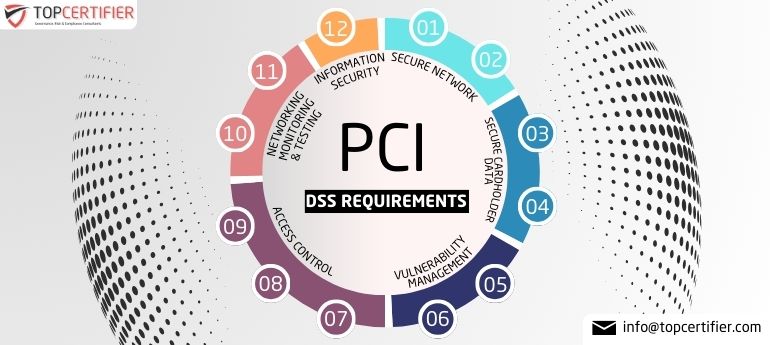
PCI DSS requirements include protecting cardholder data, maintaining secure networks, implementing access controls, managing vulnerabilities, monitoring security activities, and maintaining information security policies to protect payment environments.
The PCI DSS Certification process generally includes scope identification, gap analysis, security assessment, implementation of required controls, vulnerability management, compliance validation, and audit support.
PCI DSS Gap Analysis evaluates an organization's existing security practices against PCI DSS requirements to identify compliance gaps, security weaknesses, and improvement areas before formal assessment.
PCI DSS Certification helps organizations strengthen payment security, protect cardholder information, improve cybersecurity practices, demonstrate compliance commitment, and build confidence among customers and business partners.
Organizations can achieve PCI DSS Certification by understanding applicable requirements, performing a compliance gap analysis, implementing necessary security controls, conducting security reviews, and completing the required compliance validation process.
Client Review






GLOBAL SUPPORT
India| USA| Canada| London| UK| Australia| New Zealand| South Africa| Singapore| Dubai,Uae| Saudi Arabia| SriLanka| Bangladesh| Myanmar| Germany| Malaysia| Fiji| Maldives| Bahrain| Kuwait| Oman| Qatar| Nigeria| Kenya| Lebanon| Iraq| Jordan| Thailand| Philippines| Spain| Turkey| Israel| Iran| Algeria| Angola| Ethiopia| Congo| Belgium| Austria| Portugal| Italy
Our Recent Blogs