
PCI DSS Compliance Certification – Complete Guide to PCI DSS Compliance Requirements, Assessment & Implementation
PCI DSS Compliance Certification helps organizations that store, process, or transmit payment card data demonstrate compliance with the Payment Card Industry Data Security Standard (PCI DSS). Our PCI DSS compliance services include gap analysis, compliance assessment, implementation support, security control validation, vulnerability assessment, risk management, audit readiness, and ongoing compliance support. Achieve PCI DSS compliance to protect cardholder data, strengthen payment security, reduce cybersecurity risks, and meet global payment industry requirements.
Organizations that store, process, or transmit payment card information must implement robust security measures to protect sensitive cardholder data and maintain customer trust. PCI DSS Compliance Certification demonstrates that an organization has implemented the security controls required by the Payment Card Industry Data Security Standard (PCI DSS). Achieving PCI DSS compliance helps organizations reduce cybersecurity risks, prevent payment fraud, meet industry requirements, and establish a secure payment processing environment.
PCI DSS Compliance Certification validates that your organization has implemented the necessary security controls to protect cardholder data, secure payment transactions, and comply with globally recognized PCI DSS requirements.
PCI DSS compliance improves payment security, minimizes the risk of data breaches, enhances customer confidence, supports regulatory requirements, and strengthens your organization's overall cybersecurity posture.
What is PCI DSS Compliance Certification?
PCI DSS (Payment Card Industry Data Security Standard) is an internationally recognized security standard developed by the PCI Security Standards Council to protect payment card information. PCI DSS Compliance Certification is the process of assessing, implementing, validating, and maintaining security controls that safeguard cardholder data across payment environments.
The PCI DSS compliance process includes defining the compliance scope, conducting a gap analysis, implementing technical and administrative security controls, performing vulnerability assessments, supporting compliance audits, and continuously monitoring security controls. Organizations that achieve PCI DSS compliance demonstrate their commitment to protecting customer payment information while meeting industry security standards.
There are four PCI DSS Compliance Levels based on the annual number of payment card transactions processed:
PCI DSS Compliance Level 1: More than 6 Million Transactions Per Year
PCI DSS Compliance Level 2: 1 Million to 6 Million Transactions Per Year
PCI DSS Compliance Level 3: 20,000 to Less Than 1 Million E-commerce Transactions Per Year
PCI DSS Compliance Level 4: Less than 20,000 E-commerce Transactions Per Year or up to 1 Million Total Transactions Annually
Why is PCI DSS Compliance Certification Important?
As digital payments continue to grow, organizations must protect payment card information from evolving cyber threats. PCI DSS Compliance Certification provides a structured framework for implementing security best practices, protecting cardholder data, preventing payment fraud, and ensuring compliance with payment industry requirements.
Achieving PCI DSS compliance enables organizations to strengthen cybersecurity, improve customer trust, reduce security vulnerabilities, meet merchant and payment brand requirements, avoid penalties associated with non-compliance, and demonstrate their commitment to secure payment processing.
Achieve PCI DSS Compliance Certification in 10 Strategic Steps
1. Initial Consultation & Compliance Assessment
Our PCI DSS consultants evaluate your business processes, payment infrastructure, cardholder data environment, and existing security controls to determine your current compliance status.
2. PCI DSS Scope Definition
We identify all systems, applications, personnel, and business processes involved in storing, processing, or transmitting cardholder data to accurately define the PCI DSS assessment scope.
3. PCI DSS Gap Analysis
A comprehensive gap analysis is conducted against PCI DSS v4.0 requirements to identify missing controls, security weaknesses, compliance gaps, and improvement opportunities.
4. Compliance Roadmap Development
A structured implementation roadmap is created to prioritize remediation activities, establish timelines, and ensure efficient PCI DSS compliance implementation.
5. Security Awareness & Employee Training
Employees receive awareness training on PCI DSS requirements, secure payment handling procedures, access management, password policies, and cybersecurity best practices.
6. PCI DSS Control Implementation
Organizations implement required technical and administrative controls, including firewall security, encryption, access control, vulnerability management, logging, monitoring, and secure network architecture.
7. Internal Compliance Review
Internal reviews verify that all PCI DSS controls have been properly implemented and documented before the formal compliance assessment.
8. Vulnerability Assessment & Penetration Testing
Required vulnerability scans, penetration testing, remediation verification, and technical assessments are performed to strengthen payment security and support compliance validation.
9. PCI DSS Compliance Assessment
Compliance assessments validate that implemented security controls satisfy applicable PCI DSS requirements. Any remaining observations are addressed before final validation.
10. Maintain Continuous PCI DSS Compliance
PCI DSS compliance is an ongoing process. Organizations continuously monitor security controls, perform regular assessments, update security measures, and maintain compliance with evolving PCI DSS requirements.
By following this proven 10-step methodology, organizations can successfully achieve PCI DSS Compliance Certification, strengthen payment security, protect sensitive cardholder data, reduce cyber risks, and demonstrate ongoing compliance with globally recognized payment security standards.
Which Industries Require PCI DSS Compliance Certification?
PCI DSS Compliance Certification is essential for any organization that stores, processes, or transmits payment card information. Regardless of business size, organizations handling cardholder data must implement PCI DSS security controls to protect sensitive payment information, reduce cyber threats, and comply with payment industry security requirements.
Businesses across multiple industries rely on PCI DSS compliance to establish secure payment environments, minimise the risk of data breaches, improve customer confidence, and demonstrate their commitment to protecting payment card information.
Industries That Benefit from PCI DSS Compliance Certification:
- E-Commerce Websites and Online Retailers
- Banks, Financial Institutions and FinTech Companies
- Payment Gateways and Payment Service Providers
- Hospitality, Hotels and Travel Businesses
- Healthcare Organizations Accepting Card Payments
- SaaS Providers and Cloud Service Companies
- Retail Chains and Supermarkets
- Subscription-Based Businesses and Digital Platforms
Benefits of PCI DSS Compliance Certification
Implementing PCI DSS requirements offers significant business and security advantages beyond regulatory compliance. PCI DSS Compliance Certification demonstrates your organization's commitment to protecting customer payment information while improving operational security and reducing cyber risks.
- Protects sensitive cardholder data from unauthorized access and cyber threats.
- Reduces the likelihood of payment fraud and data breaches.
- Strengthens customer confidence and enhances brand reputation.
- Helps organizations meet payment industry security requirements.
- Improves cybersecurity governance and risk management.
- Supports secure digital payment processing across business operations.
- Demonstrates continuous commitment to payment security and compliance.
PCI DSS Compliance Success Stories
- Global E-Commerce Company Improved Payment Security A leading online retailer implemented PCI DSS security controls to strengthen payment processing systems, reduce cybersecurity risks, improve customer trust, and successfully achieve PCI DSS compliance.
- FinTech Organization Enhanced Cardholder Data Protection A financial technology company strengthened access controls, encryption mechanisms, vulnerability management, and security monitoring to comply with PCI DSS v4.0 requirements and improve payment security.
- Payment Service Provider Achieved Compliance Readiness A payment processing organization completed PCI DSS gap analysis, implemented recommended security controls, and successfully prepared for compliance assessment through structured implementation and audit support.
- Healthcare Provider Secured Online Payment Systems A healthcare organization processing online patient payments implemented PCI DSS controls to improve payment security, protect cardholder information, and minimise exposure to payment-related cyber threats.
- Retail Enterprise Strengthened Compliance Across Multiple Locations A multi-location retail business standardised PCI DSS security controls across all payment environments, enabling consistent compliance management and secure payment processing throughout its operations.
These implementation success stories demonstrate how organizations across retail, banking, healthcare, hospitality, e-commerce, SaaS, and financial services use PCI DSS Compliance Certification to protect payment card information, improve cybersecurity, strengthen customer confidence, and maintain continuous compliance with global payment security standards.
Why Choose TopCertifier for PCI DSS Compliance Certification?

PCI DSS Compliance Experts
Download PCI DSS BrochureTopCertifier, a division of Veave Technologies Pvt. Ltd., provides end-to-end PCI DSS Compliance Certification services to organizations across various industries. Our experienced consultants assist businesses with PCI DSS gap analysis, compliance implementation, security assessments, audit preparation, remediation support, and continuous compliance management.
Using industry best practices and proven implementation methodologies, TopCertifier helps organizations achieve PCI DSS Compliance Certification efficiently while strengthening payment security, protecting cardholder data, reducing cyber risks, and maintaining long-term compliance with PCI DSS requirements.
Related PCI DSS Resources
PCI DSS Templates Free Download
Our Security Services
- TPRM Service
- SIEM Service
- SOC and NOC Service
- SOC as a Service
- NOC as a Service
- SSAE 18 and SSAE 16 Report
- ISAE 3402 and ISAE 3000 Report
- SSAE 3402 and SSAE 3000 Report
- SOX Attestation
- US GAAP Audit and Reporting
- CPA Firm
- Smeta Audit Service
ISO Certifications
- ISO 9001 Certification - Quality Management System
- ISO 14001 Certification - Environmental Management
- ISO 45001 Certification
- ISO 22000 Certification - Food Safety Management System
- ISO 27001 Certification - Information Security Management
- CMMI Certification - Capability Maturity Model Integration
- EU GDPR Certification - General Data Protection Regulation
- HIPAA Certification – Health Insurance Portability and Accountability Act
- PCI DSS Certification - Payment Card Industry
- SOC 2 Certification - System Organisation Standard
Frequently Asked Questions
PCI DSS (Payment Card Industry Data Security Standard) Certification is a security compliance framework that helps organizations protect cardholder data, secure payment environments, and implement industry-recognized security controls for handling payment information.
PCI DSS Certification is required for organizations that store, process, or transmit payment card information, including e-commerce businesses, payment service providers, financial institutions, fintech companies, and organizations handling cardholder data.
PCI DSS Compliance helps organizations protect sensitive payment information, reduce security risks, improve customer trust, prevent data breaches, and maintain secure payment processing practices.
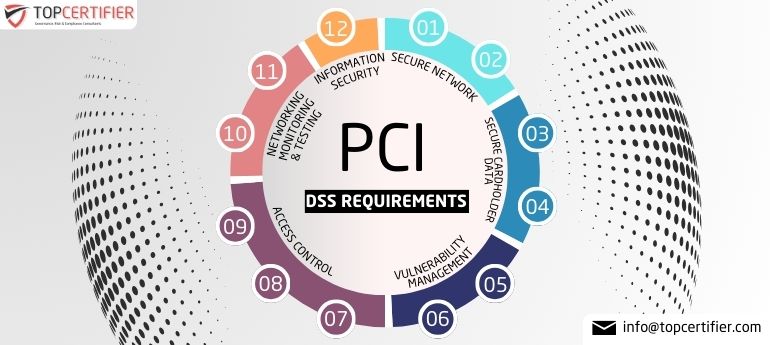
PCI DSS requirements include protecting cardholder data, maintaining secure networks, implementing access controls, managing vulnerabilities, monitoring security activities, and maintaining information security policies to protect payment environments.
The PCI DSS Certification process generally includes scope identification, gap analysis, security assessment, implementation of required controls, vulnerability management, compliance validation, and audit support.
PCI DSS Gap Analysis evaluates an organization's existing security practices against PCI DSS requirements to identify compliance gaps, security weaknesses, and improvement areas before formal assessment.
PCI DSS Certification helps organizations strengthen payment security, protect cardholder information, improve cybersecurity practices, demonstrate compliance commitment, and build confidence among customers and business partners.
Organizations can achieve PCI DSS Certification by understanding applicable requirements, performing a compliance gap analysis, implementing necessary security controls, conducting security reviews, and completing the required compliance validation process.
Client Review






GLOBAL SUPPORT
India| USA| Canada| London| UK| Australia| New Zealand| South Africa| Singapore| Dubai,Uae| Saudi Arabia| SriLanka| Bangladesh| Myanmar| Germany| Malaysia| Fiji| Maldives| Bahrain| Kuwait| Oman| Qatar| Nigeria| Kenya| Lebanon| Iraq| Jordan| Thailand| Philippines| Spain| Turkey| Israel| Iran| Algeria| Angola| Ethiopia| Congo| Belgium| Austria| Portugal| Italy
Our Recent Blogs